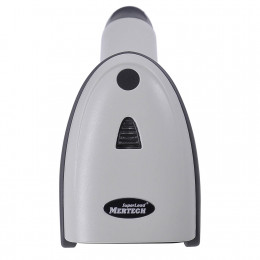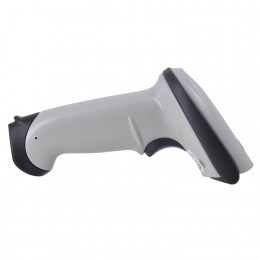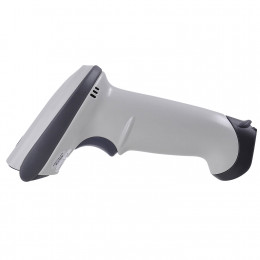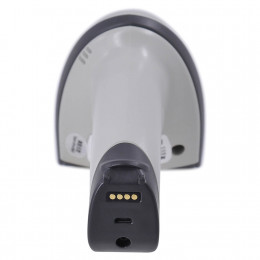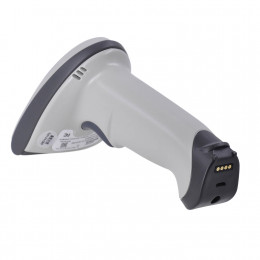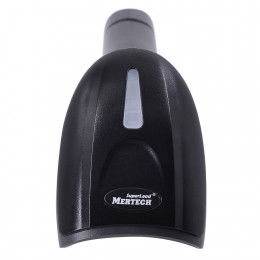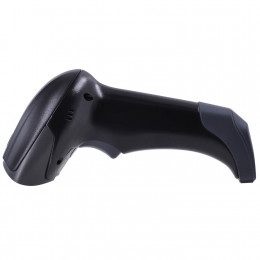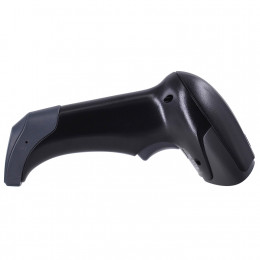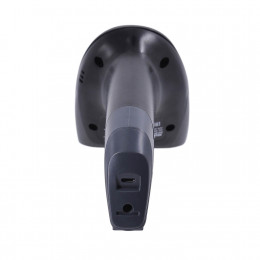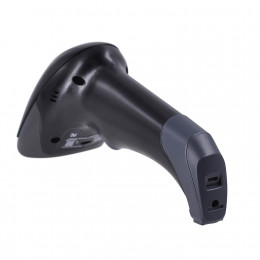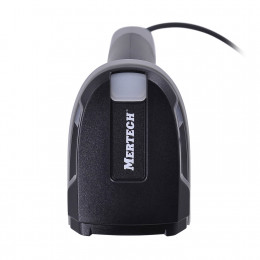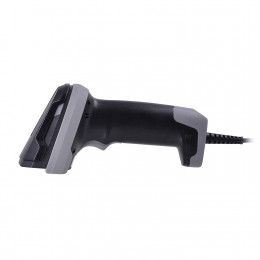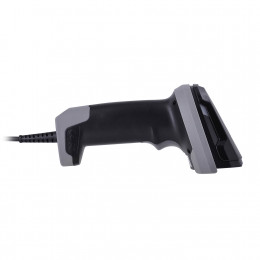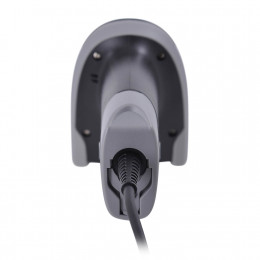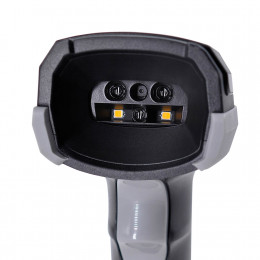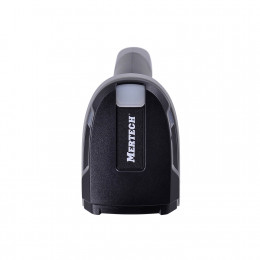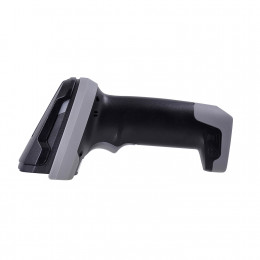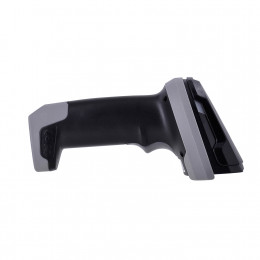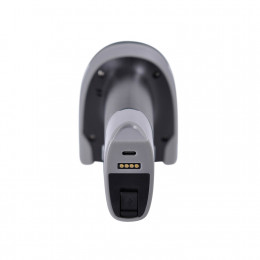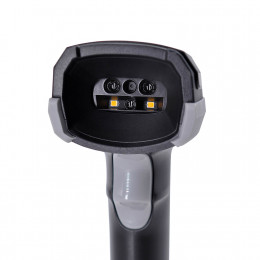
Which barcode scanner should you buy in 2026? For businesses in Armenia the answer is almost always the same: a 2D imager that reads EAN and UPC on packaging, DataMatrix on marked products and QR codes from smartphone screens. Beyond that, the choice depends on your format: a neighborhood store, a supermarket, a pharmacy, a warehouse or a parcel pickup point. Below you will find the rating of the best MERTECH scanners of 2026, selection criteria and a closer look at the leading models — so you buy a device for your actual checkout, not "just in case".
In 2026, only a 2D imager is worth buying. A laser scanner is cheaper but cannot read QR or DataMatrix — which rules it out for product marking and for loyalty programs with codes on phone screens.
MERTECH barcode scanner rating 2026
The rating is built around tasks and the popularity of models among MERTECH customers. Every device on the list is a 2D imager: it reads linear and two-dimensional codes, works with phone screens and connects to the checkout without drivers. Current prices in Armenian drams (֏) are listed in the catalog and available from our managers; delivery across Armenia is calculated individually.
- MERTECH 2410 P2D — the best all-round handheld scanner: Superlead technology, reads codes from 3 MIL density at up to 380 mm, trigger rated for 5 million presses. For stores, cafés and pharmacies.
- MERTECH 1300 GS P2D — the best budget 2D scanner: Global Shutter sensor, range up to 350 mm, compact body. For small neighborhood stores.
- MERTECH CL-2410 BLE Dongle P2D — the best wireless model: Bluetooth BLE 5.2 with a range of up to 300 m, 2600 mAh battery. For warehouses, receiving and pickup points.
- MERTECH 8500 P2D Mirror — the best stationary scanner: 350 scans per second, 50°×35° field of view. For supermarkets with heavy customer traffic.
- MERTECH 2310 P2D HR — for small and damaged codes: 1280×1080 sensor, 3 MIL, range up to 570 mm. For pharmacies and marked products.
- MERTECH 2210 P2D — the checkout workhorse: 3 m cable, range up to 370 mm, reliable USB. For mini-markets and café checkouts.
- MERTECH X21 BLE Dongle P2D — a ring scanner: connection up to 100 m, up to 10,000 scans per charge. For order picking when both hands are busy.
Note that the price gap between a budget and a top handheld scanner is small, while the pricier model reads small and damaged codes faster. That saves the cashier time every single day — and the queue moves noticeably quicker.
Quick cheat sheet: which scanner fits your format
- Neighborhood store, light traffic — a wired 2D: MERTECH 1300 GS or 2210.
- Store with marked products, pharmacy — a high-resolution wired 2D: MERTECH 2410 or 2310 HR.
- Supermarket, several checkouts — the stationary MERTECH 8500 or a handheld scanner on a stand.
- Warehouse, goods receiving — the wireless MERTECH CL-2410; for full accounting in your hands, a data collection terminal.
- Parcel pickup point — a wired scanner at the counter and a wireless one for receiving.
- Café, coffee shop — a handheld 2D with automatic reading mode: MERTECH 2410.
Scanner types: technology and design
By reading technology. LED scanners were the first generation: cheap and reliable, but they read only simple 1D codes and struggle with glossy surfaces. Laser scanners are fast and long-range on linear codes, yet fundamentally cannot read 2D. Imager scanners (2D photo scanners) literally photograph the code and decode it with a processor: they handle any code, at any angle, from smartphone screens and damaged labels. For a new store or an equipment refresh, choose only imagers — the range is collected in the 2D barcode scanners section.
By design. Wired scanners connect via USB or RS-232, never need charging and cost less than wireless ones — ideal for the checkout. Wireless scanners work over Bluetooth or a radio link and give freedom of movement: indispensable in warehouses and with bulky goods; some models keep data in built-in memory when the connection drops — see the wireless barcode scanners section. Stationary scanners sit on the checkout counter or are built into the cash desk: the cashier works with both hands and throughput grows. A separate class is ring scanners and wearables for order picking. Classic handheld models of every type are gathered in the handheld barcode scanners section.
MERTECH proprietary technologies and selection criteria
MERTECH is an international manufacturer, and its scanners include three proprietary technologies that solve typical checkout problems:
- Superlead — fast reading of poorly printed and damaged barcodes, confident work with codes on smartphone screens.
- Antireflect — glare-free illumination: the scanner reads codes on glass, plastic and glossy packaging without errors.
- Vibrocheck — vibration feedback on a successful scan: in a noisy checkout zone the cashier feels the confirmation even without hearing the beep.
Now the criteria to compare models by:
- Code compatibility. If your range includes marked products or a QR loyalty program, only 2D will do. Even if today you scan nothing but EAN codes, a 2D imager is future-proofing without an equipment replacement.
- Speed and accuracy. With heavy traffic, dozens of scans per second and omnidirectional reading are critical: a slow scanner creates queues.
- Interfaces. USB or RS-232 for a standard checkout, Bluetooth for mobile work and pickup points.
- Durability and service life. Scanners get dropped regularly: check drop resistance and trigger life. The MERTECH 2410, for example, survives up to 50 drops from 1.8 m.
- Warranty and service. MERTECH scanners come with an extended 3-year warranty. Confirm service availability and support in Armenia — checkout downtime costs more than any price difference.
The rating leaders in detail
MERTECH 2410 P2D
A universal handheld 2D scanner with the best price-to-capability ratio. 100 scans per second, range up to 380 mm, reads codes from 3 MIL thanks to Superlead. It has an automatic reading mode — put it on a stand and work without pressing the trigger. Survives up to 50 drops from 1.8 m; the trigger is rated for 5 million presses. Fits stores, cafés, restaurants and pharmacies.
MERTECH 1300 GS P2D
The best budget 2D scanner for a small outlet. The Global Shutter sensor confidently reads codes from phone screens and in motion, with a range of up to 350 mm. Compact body, USB connection, support for 1D and 2D including DataMatrix and QR. If you are opening a neighborhood store and want minimum spend without feature compromises, this is your option.
MERTECH CL-2410 BLE Dongle P2D
The top wireless scanner: transmits data over Bluetooth BLE 5.2 at up to 300 m, while standard alternatives are limited to about a hundred meters. The 2600 mAh battery provides long autonomous operation. Ideal for warehouses, receiving and pickup points where boxes are inconvenient to bring to the computer. In the wireless segment, also consider the MERTECH CL-610 — a model with a charging base, convenient for checkout zones and light receiving.
MERTECH 8500 P2D Mirror
The best stationary scanner for a supermarket: 350 scans per second and a wide 50°×35° field of view. Just pass the product over the window — the cashier works with both hands and the queue moves faster. For high-traffic checkout zones this is the most efficient solution; the MERTECH line includes other stationary models as well, such as the M-ER 8400 — check configurations in the catalog.
MERTECH 2310 P2D HR
A model with a high-resolution 1280×1080 sensor: reads codes from 3 MIL density at distances up to 570 mm. Built for small and damaged DataMatrix codes — the typical challenge of pharmacies and products with dense marking on small packaging. If regular scanners stumble on your codes, start exploring the line with the HR version.
FAQ
Which scanner should I choose for a small store?
A wired 2D scanner: simple to connect, works over USB and never needs charging. The optimal budget option is the MERTECH 1300 GS P2D: it reads 1D and 2D including DataMatrix and QR, and is compact and reliable. With heavier customer traffic, look at the MERTECH 2410 P2D.
Do I need a 2D scanner if I only have 1D codes?
Yes. Product marking uses DataMatrix, and loyalty programs use QR codes on phone screens. Buying a 2D imager today means you will not replace equipment when your range expands. The price difference from 1D models has long been insignificant.
Which scanner is best for a warehouse or pickup point?
A wireless one: mobility and connection range are what matter. The MERTECH CL-2410 transmits data up to 300 m and runs long on its 2600 mAh battery. For order picking with both hands busy, the MERTECH X21 ring scanner fits.
How does an imager differ from a laser scanner?
A laser scanner sweeps a beam across a linear code and cannot read two-dimensional codes. An imager photographs the whole code and decodes it with a processor: it reads 1D and 2D, works at any angle, from screens and damaged labels. For modern retail it is the only universal option.
How do I connect a scanner to the checkout?
Most MERTECH models connect over USB and are recognized as a keyboard: the scanned code is typed into the active field of the checkout software without drivers. For RS-232 or Bluetooth integration with an accounting system, ask our specialists about the settings.
Conclusion
The best barcode scanner of 2026 is the one that matches your retail format: the budget 1300 GS for a neighborhood store, the universal 2410 for most checkouts, the wireless CL-2410 for warehouses and the stationary 8500 for supermarkets. All of them read 1D and 2D including DataMatrix and QR, and all are covered by an extended 3-year warranty. MERTECH specialists will help you pick a scanner for your checkout and accounting system: call +374 41 50-15-04, write to info@mertech.am or leave a request on our contact page. Pickup is available in Yerevan, 41/2 Shirazi Street.